








Caffeine
Caffeine
Introduction
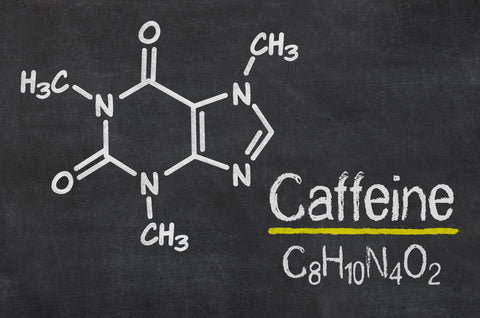
For many athletes, 1,3,7-trimethylxanthine from coffee is not only part of the morning routine to even get out of bed but has also become a very important component for optimizing athletic performance. We are talking about caffeine.
Effects of caffeine and where it is found?
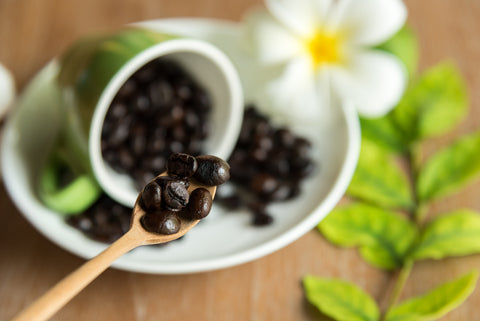
Caffeine is an alkaloid and occurs as a natural active ingredient in coffee beans, tea plants, guarana berries, cocoa beans, etc. (see Table 1). It is one of the oldest recreational and medicinal substances in the world [1].
Table 1: Caffeine content in coffee and other drinks/foods [modified after 11]|
Drink/Food |
Serving |
Caffeine content (mg/serving) |
|
Coffee |
150 ml |
50-120 |
|
Black tea |
150 ml |
15-20 |
|
Cocoa |
250 ml |
10 |
|
Coca Cola |
330 ml |
50 |
|
Energy drinks |
250 ml |
80 |
|
Chocolate |
50 g |
40 |
The spectrum of caffeine’s effects is as broad as some egos after a successfully completed PR attempt. The stimulating effect is due to various factors:
- Stimulation of the CNS [13, 14]
- Improvement of neural activation of muscles [4]
- Reduction of subjective perception of effort [1]
- Stimulation of the cardiovascular system [1]
- Glycogen sparing with increased lipolysis [12]
- Promotion of calcium release from the sarcoplasmic reticulum [6]
Specific effects on performance
Caffeine can positively affect physical performance. However, the mechanisms of action are not yet fully understood. Caffeine does not have a direct effect on short-term efforts like sprints or on improving muscle strength [9], but it can stimulate the central nervous system and thus noticeably improve focus during training.
In the following situations, caffeine can directly influence performance [1]:
- During high-intensity efforts lasting 1-20 minutes.
- Especially in endurance competitions lasting over 20 minutes.
This is attributed to the glycogen-sparing effect. Furthermore, glycogen resynthesis after physical exertion is improved. Overall, this results in a performance-enhancing effect in sports of about 4% when 3-13 mg of caffeine per kg of body weight is consumed [2, 5, 13, 14]. However, especially the high doses can lead to significant side effects - but more on that later.
On lipolysis -> fat burning:
Caffeine has the ability to stimulate lipolysis in the body. This means that after intake, there is a short-term increased release of fatty acids from fat tissue [14]. However, this should not lead to the conclusion that coffee after a meal regulates increased fat burning and that one can eat whatever they want without gaining fat. Noticeable fat loss does not occur unless the body sees a need to use the additional fatty acids as an energy source. After the caffeine effect subsides, the fatty acids are stored again in the fat tissue. From this mechanism, it can be inferred that fat burning is generally favored, but nutrition and training must also be appropriately adjusted [8]. Lopez-Garcia et al. (2006) examined coffee consumption in relation to weight over a 12-year observation period involving more than 58,000 men and women. It was found that healthy individuals with high caffeine intake accumulated less body fat compared to healthy individuals with lower caffeine intake. The cause is attributed to the additional energy expenditure from the re-esterification of glycerol and free fatty acids after the caffeine effect has worn off. Regular morning and work coffee can, therefore, have a positive impact on weight management in addition to athletic performance [7].
Another positive effect on energy metabolism is the inhibition of the enzyme PDE (phosphodiesterase). When physical activity leads to an increased release of activity hormones such as noradrenaline, adrenaline, etc., these bind to the β-adrenoceptor and activate the messenger cAMP. This ultimately leads to increased energy consumption. However, cAMP is inhibited by the enzyme PDE. This enzyme can, in turn, be suppressed by substances like caffeine. Thus, the "brake" is released, and cAMP remains active [10].
Caffeine Side Effects
At lower doses of 3-6 mg caffeine/kg body weight, a complete tolerance development is not to be expected, but first side effects can already occur in very caffeine-sensitive people from an amount of about 200 mg/day. The consequences can manifest as inner restlessness, headaches, insomnia, trembling, or nervousness. However, if, for example, a 70 kg person does not exceed the amount of 2 cups of coffee (about 200 mg caffeine) before sports, the described symptoms usually do not have to be expected. However, the intake of caffeine powder and so-called "hardcore boosters" should be considered carefully, as doses of 10-15 mg caffeine/kg body weight can be quickly reached here, leading to strong side effects up to dangerous heart rhythm disturbances and mild hallucinations [2]. Furthermore, caffeine is often associated with a diuretic effect. However, caffeinated drinks do not, as often assumed, lead to increased fluid loss but are to be rated similarly to water due to the diuretic effect [2]. In athletes who regularly consume coffee, the diuretic effect is even more negligible [15].
Application and Dosage -> Caffeine Duration of Effect
3 to a maximum of 6 mg caffeine/kg body weight (equivalent to two regular cups of coffee at 3 mg) is recommended by the American College of Sports Medicine without the need to expect unwanted side effects from intake [ACSM, 2007]. The full effect is reached after about 30-60 minutes and lasts for about 5 hours (caffeine half-life). However, the habituation effect [11] is also decisive for the effect. Therefore, it makes sense not to consume astronomically high doses of caffeine before every training session but to start with a strong cup of espresso, otherwise the performance-enhancing effects at lower doses quickly disappear.
Conclusion
Caffeine is not without reason listed as one of the few active ingredients on the A-list according to the study situation [3]. Therefore, caffeine is also used in the training boosters from Rocka Nutrition in an adequate amount of 250 mg per serving. So if you ever don’t feel like having a coffee before training, G.O.A.T. and G.O.A.T. Pump with their active ingredient profile offer a great alternative. However, the exact mode of action of the pre-workout boosters will be discussed in one of the upcoming blogs.
References
1: Antidoping Switzerland (2009). Caffeine (Supplements/Prevention/Fact Sheets). Accessed on 02.09.2016. Available at http://www.antidoping.ch/sites/default/files/downloads/2014/110812_fb_koffein.pdf2: American College of Sports Medicine (2007). Caffeine and Exercise Performance. Accessed on 01.09.2016. Available at https://www.acsm.org/docs/current-comments/caffeineandexercise.pdf
3: Australian Institute of Sport (AIS). (2012). AIS Supplement Group Classification. Accessed on 25.08.2016. Available at http://www.ausport.gov.au/ais/nutrition/supplements/classification
4: Bazzucchi, I., Felici, F., Montini, M., Figura, F. & Sacchetti, M. (2011). Caffeine improves neuromuscular function during maximal dynamic exercise. Muscle Nerve, 43 (6), 839-844.
5: Doherty, M. & Smith, P.M. (2005). Effects of caffeine ingestion on rating of perceived exertion during and after exercise: a meta-analysis. Scandinavian Journal of Medicine & Science in Sports, 15 (2), 69–78.
6: Endo M. (2009). Calcium-induced calcium release in skeletal muscle. Physiological Review, 89 (4), 1153-76.
7: Lopez-Garcia, E., van Dam, R.M., Rajpathak, S., Willett, W.C., Manson, J.E. & Hu, F.B. (2006). Changes in caffeine intake and long-term weight change in men and women. The American Journal of Clinical Nutrition, 83 (3), 674-680.
8: Manore (2012). Dietary supplements for improving body composition and reducing body weight: where is the evidence? International Journal of Sports Nutrition and Exercise Metabolism, 22 (2), 139-154.
9: Massad, S.J. (1994). Caffeine and exercise update. ICHPER.SD journal: the official magazine of the International Council for Health, Physical Education, Recreation, Sport and Dance, 30 (2), pp. 43–47.
10: Michalk, C. & Böhm, P. (2016). Accelerate Metabolism. edubily.
11: Neumann, G. (2016). Nutrition in Sport (8th, revised edition). Meyer & Meyer Sport.
12: Scientific Committee on Food (2001). Composition and specification of food intended to meet the expenditure of intense muscular effort, especially for sportsmen. Accessed on 02.09.2016. Available at http://ec.europa.eu/food/fs/sc/scf/out64_en.pdf
13: Spriet, L.L. (2014). Exercise and sport performance with low doses of caffeine. Sports Medicine, 44 Suppl 2, S175-S184.
14: Weiß, C. (2007), Caffeine. Nutrition Review, 4, 211-215.
15: Killer, S.C., Blannin, A.K. & Jeukendrup, A.E. (2014). No evidence of dehydration with moderate daily coffee intake: a counterbalanced cross-over study in a free-living population. PloS One, 9 (1), e84154.