








Oatmeal - The Local Superfood
Do Oat Flakes Still Stand a Chance Against Chia, Amaranth & Co.?
The term “Superfoods” has been on everyone’s lips for years – the more exotic the name, the better. That’s why chia, acai, camu-camu, and matcha are found in our kitchen cupboards, promising numerous health benefits and the most valuable nutrients – often at a not-so-affordable price. Can foods native to this country really no longer compete?

Oat flakes have gained enormous popularity again in recent years thanks to social networks. The only thing that has become outdated is the term “Haferschleim” (oat slime). Admittedly, the name porridge sounds much more appetizing. However, the positive properties of oats have not changed over the years. To assess whether oats can be called a superfood just like the more exotic representatives mentioned above, the ingredients of oats will be examined more closely below.
The Benefits of Oats at a Glance
- Oat flakes contain a high amount of the fiber beta-glucan, which keeps you full for a long time and protects against unwanted cravings.
- Oat flakes are rich in iron, magnesium, and zinc, contributing to physical performance and supporting healthy muscle function.
- The vitamin E in oats protects cell membranes from free radicals.
- Vitamins B1, B9, and K additionally protect the nervous and immune systems.
- The trace element silicon supports bones and joints.
- Thanks to biotin, oat flakes also promote healthy skin, hair, and nails.
- With 13.5 grams of protein per 100 grams, oat flakes are among the protein-rich plant-based foods.
- Oats have been proven to improve blood sugar levels in diabetes patients and help prevent heart disease and arteriosclerosis.
- Flavonoids have anti-inflammatory effects.
What Else Can Fiber Do Besides Making You Feel Full?
As you’ve already read in the list, oat flakes contain a high amount of fiber. It may not be news to you that fiber generally ensures long-lasting satiety and can prevent cravings. But fiber has many other positive effects on your health that should not go unmentioned here. Fiber can help lower cholesterol levels. This is possible because cholesterol is bound in bile acid. Since certain fibers stimulate bile acid production and cholesterol is needed for this, less cholesterol is available in the blood. [1], [2]
Oats especially contain the soluble fiber beta-glucan. It is responsible for the slimy consistency and swelling of oats when mixed with liquid. This leads to both a long-term reduction in blood sugar levels and the avoidance of strong fluctuations in blood sugar levels throughout the day. The latter benefits not only diabetics but also helps prevent cravings as mentioned above. Studies also show that consuming just 3g of beta-glucan daily can potentially help prevent coronary heart disease and various cancers. [3] For comparison: 100 grams of oats contain between 2.3 and 8.5 grams of beta-glucan depending on the product, which can already cover the entire daily requirement! The typical viscous consistency of oats and especially oat flakes due to fiber also benefits our stomach and intestines. The binding of water-soluble fibers with water creates a gel-like layer that protects the stomach and intestines. [4] It’s no coincidence that “Haferschleim” has always been considered a very suitable meal for an upset stomach. It can therefore be concluded that many of the positive effects of oat consumption are ultimately due to or supported by its high fiber content. [5]
Germany Is in Oat Fever
The list of positive properties of oats above clearly answers the initial question of this article: oats or oat flakes are in no way inferior to exotic superfoods. Additional benefit: they are much more affordable and available in every supermarket. Whether porridge, overnight oats, or as a topping for quark, the fact that oat flakes are back in full trend is evident not only in media presence but also in statistics. In 2014, 2.26 million people reported consuming oat flakes several times a week. By 2017, this number had already risen to 2.8 million! [6] If reading this article has made you want to incorporate oats more into your daily diet, we have gathered some preparation tips for you below.
Our Tips for Preparation
- To combine complex carbohydrates and essential amino acids in one meal, you can easily mix porridge with protein powder! Here you can go directly to the porridge recipe with preparation steps. Bonus tip: it also works great in the microwave and especially well with ROCKA WHEY ISOLATE Vanilla Ice!
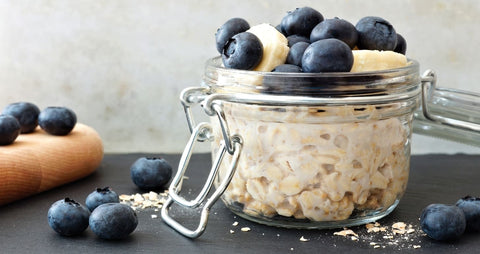
- If you really have no time to prepare breakfast in the morning, try overnight oats. For this, soak oat flakes overnight in 2 to 3 times the amount of water or milk in the fridge and add all the ingredients of your choice. Your creativity knows no bounds here: whey, fresh fruit, dried fruit, nuts and seeds, and so on. For an extra flavor experience, we also recommend using SMACKTASTIC in one of the many flavors for your oat flakes.
- Bonus tip: try cooking overnight oats with pudding powder to create pudding oats! Oat flakes are also great as an ingredient for a healthy cake! For example, with our apple cheesecake with a moist porridge base.
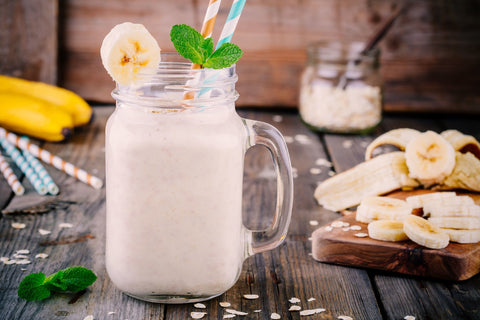
- You can also mix oat flakes into your post-workout shake. Simply blend protein powder, oat flakes, and milk or water briefly in a blender or add rolled oats directly to the shaker with the powder and possibly use a little more liquid than usual. Depending on your nutritional goal, we recommend both YUM YUM WHEY and our ROCKA WHEY ISOLATE.
[1] Ernährungsumschau (2012): Beta-Glucan from oats – health-related claims within the framework of the Health Claims Regulation and other nutritional physiological properties, 4/2012: 242 f.
[2] Amundsen, A.L. et al. (2003): Changes in serum cholesterol and sterol metabolites after intake of products enriched with an oat bran concentrate within a controlled diet, Scandinavian Journal of Nutrition, 47(2): 68-74.
[3] Rasane, P. et al. (2015): Nutritional advantages of oats and opportunities for its processing as value-added foods – a review, Journal of Food Sciences and Technology, 52(2): 662-675.
[4] Rose, D.J. (2014): Impact of whole grains on the gut microbiota: the next frontier for oats, British Journal of Nutrition, 112: 44-49.
[5] Assman Foundation for Prevention (2018): Fiber and its effects, https://www.assmann-stiftung.de/gesunde-ernaehrung/ballaststoffe/, accessed on 05.09.2018. [6] Statista (2018): Population in Germany by frequency of oat flakes consumption from 2014 to 2017 (in millions), accessed on 04.09.2018.