










The Ultimate Vitamin Guide
Everything you need to know about vitamins
"5 servings of fruits and vegetables a day." We've all heard, read, or been directly told this recommendation. An adequate amount of fresh foods is supposed to ensure that the body receives enough vitamins and minerals. These are needed not only for general health and well-being but also to maintain important bodily functions. Almost all vitamins are essential, meaning your body needs them to survive. The whole thing becomes complicated by the fact that our organism cannot synthesize these urgently needed substances itself. It therefore relies on an external supply of vitamins through food intake. That's the rough theory, but what else do we know about these important micronutrients? Which vitamins are found in which foods? And what specific roles do the individual power substances play in the body? In our vitamin guide, we've compiled all the important information and key facts about each substance for you.

In short: These are the roles vitamins play in the body
- Vitamins ensure the smooth functioning of metabolism.
- They regulate the nervous system.
- They influence your well-being, so with sufficient intake, you feel fit, healthy, and balanced.
- Vitamins strengthen your immune system. This makes you less susceptible to any infections and the general flu season.
- Vitamins also play an important role in the optimal utilization of other nutrients such as proteins, carbohydrates, and minerals.
- Adequate vitamin supply can help prevent chronic degenerative diseases.
Definition: What exactly are vitamins?
Simply put, vitamins are organic compounds that the human body needs to survive. If you've ever wondered how these power substances got their name, we're filling that knowledge gap here: The term "vitamins" comes from the Latin word Vita meaning "life" and the term Amine (= essential amines). However, it was later discovered that not all vitamins are actually amines, but the name stuck anyway. After all, people had already gotten used to it.
As early as 1906, it was established that survival is not ensured solely by macronutrients in food such as protein, fat, and carbohydrates, but that other substances must exist to keep us fit and healthy. And as we know today, these are vitamins, whose absence can lead to acute deficiency symptoms up to deficiency diseases. The distinction of vitamins by letters—i.e., vitamin A, B, C, D, E…—was introduced in 1916 and was initially meant to be provisional, as there was no specific knowledge about the structure of vitamins at that time. Today, we know of a total of 13 vitamins. Regarding their solubility properties, they can be divided into two subcategories:
- into the fat-soluble (lipophilic) vitamins A, D, E, and
- into the water-soluble (hydrophilic) vitamins B and C
This classification has proven useful because it allows statements about the occurrence, storage, and transport of the respective vital substances. According to FAO/WHO, the vitamins considered absolutely essential are A, B1, B2, B6, B12, nicotinic acid (amide), folic acid, as well as vitamins C and D.
WARNING: In general, you should try to meet your individual vitamin needs as much as possible with fresh foods—meaning fruits and vegetables, but also meat, fish, and eggs—instead of relying on numerous supplements out of convenience. However, for some vitamins, adequate intake is not so easy because they occur in many foods but only in very small amounts. If you feel you might be affected by a deficiency, you should discuss this individually with your doctor and, if in doubt, get a check-up.
How does a vitamin deficiency develop and how can you avoid it?
Before you start to panic and diagnose yourself with a vitamin deficiency, the next section will cover the causes and symptoms of a deficiency—and how you can prevent an insufficient supply. In this context, we are interested in the question: Is it even possible to have an inadequate vitamin supply given our current availability? After all, fruits and vegetables from all over the world are available year-round.
We can roughly agree with this assumption at first, because in fact vitamin supply in industrialized countries is generally no longer a problem. Throughout the year, we have access to a wide variety of foods—often in an abundant supply—so theoretically, each of us could easily ensure adequate vitamin intake.
So why does part of the population still struggle with deficiencies?
The cause initially lies in the unfavorable food choices that do not cover all vitamins and nutrients. General eating habits have changed due to prosperity. Due to lack of time or simply because it’s so convenient, many rely on highly processed ready-made products (frozen pizza, ready-made sauces, baked goods, low-quality canteen food…). And let’s be honest: how many nutrients do you still get from the 3 small tomatoes on your pizza?
Did you know that….
- that by eating more white bread you risk a deficiency in vitamin B1?
- that consuming vitamin-poor dietary fats causes a vitamin A deficiency?
- that a one-sided diet with a variety of pasta without enough fruits and vegetables can lead to a vitamin C deficiency?
- that by following a self-assembled, one-sided diet you increase the risk of experiencing symptoms of vitamin deficiency?
Not only a one-sided, nutrient-poor diet can lead to deficiencies, but also certain physical conditions such as colds or flu infections, absorption disorders due to stomach and intestinal problems, a vegetarian/vegan diet, or intense physical exertion, which increase the need, especially during pregnancy. As an active person, you should therefore pay even more attention to your individual vitamin intake. If you have a deficiency in essential vitamins, not only will your performance and general well-being suffer, but your metabolism will also be negatively affected. And you really don’t need that! Now you know what causes inadequate vitamin intake and what you should definitely avoid. But what symptoms exactly indicate a deficiency?

These symptoms indicate a vitamin deficiency:
Every initial vitamin deficiency goes through a sequence of "deficiency stages," noticeable through various changes. At first, nonspecific symptoms appear such as:
- Fatigue and exhaustion
- General malaise
- Physical and mental weakness
- Difficulty concentrating
- Impaired immune defense
- Frequent headaches, dizziness
- Stomach and abdominal pain
If a deficiency lasts longer, specific symptoms characteristic of the missing vitamin increasingly appear. You can see exactly which symptoms these are in our overview table below. A avitaminosis occurs when a vitamin is completely absent for an extended period. In severe cases, this leads to serious anatomical and morphological changes, sometimes with irreversible consequences. Okay, that sounds quite critical and shows that adequate vitamin supply is really important. Therefore, you should - as much as possible - rely on unprocessed, fresh, and wholesome foods and include them in your daily diet. If you are physically active, it may also be worthwhile to supplement with appropriate dietary supplements. At this point, we recommend our Daily Essentials. This ensures you get important nutrients like vitamin C, which is essential for your health and contributes to the normal function of the immune system.
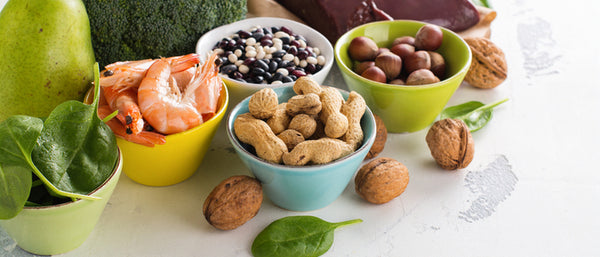
Our Tip: When preparing and processing fruits and vegetables, you should maintain certain temperatures because the vitamins they contain are very sensitive to high heat. To preserve maximum nutrient density, we recommend making fresh juices or smoothies, as no additional heat is required for their preparation.
Now that we have highlighted the urgency of daily adequate vitamin intake, let's conclude by looking at which vitamins are found in which foods and the specific roles these power nutrients play in our bodies.
In Brief: An Overview of All Vitamins
| Function in the Body | Food Sources | |
|
Vitamin A |
Vitamin A is especially important for the eyes, skin, immune system, and growth. It makes it harder for bacteria or viruses to enter the human body. Vitamin A is found only in animal foods. Plant foods contain only the precursor of the vitamin, namely the so-called provitamins A. If you have a vitamin A deficiency, it can lead to vision problems (night blindness) and increased susceptibility to infections. |
You find vitamin A in animal foods such as liver, milk, and cheese. Plant foods like Carrots, kale, and spinach contain provitamin A. |
|
Vitamin B1 |
Vitamin B1 acts as an important coenzyme in the metabolism of carbohydrates and amino acids. It also supports energy exchange, nerve excitation, and signal transmission. A deficiency shows through concentration difficulties, fatigue, and reduced muscle strength. |
Especially whole grain products, legumes, offal, and pork contain vitamin B1. |
|
Vitamin B2 |
Vitamin B2 acts as a coenzyme in carbohydrate and lipid metabolism. It is also involved in energy exchange and supports antioxidant defense. Changes in the skin and mucous membranes (mouth area) could indicate a vitamin B2 deficiency. |
You can find vitamin B2 in dairy products, meat, and eggs. |
|
Vitamin B3 |
Vitamin B3 is a hydrogen-transferring coenzyme active in all metabolic areas. It influences DNA replication and cell differentiation. A vitamin B3 deficiency manifests through nonspecific neurological disorders such as concentration difficulties and insomnia. |
Whole grain products, poultry, fish, and yeast contain vitamin B3. |
|
Vitamin B5 |
Vitamin B5 is involved in energy production and the breakdown or utilization of carbohydrates, proteins, and fats. It also supports blood formation and the metabolism of fatty acids and cholesterol. A deficiency is especially expressed through persistent sleep disturbances. |
You can find vitamin B5 in animal foods such as offal, egg yolk, and fish. But plant sources like legumes also contain this B vitamin. |
|
Vitamin B6 |
Vitamin B6 acts as a coenzyme in amino acid metabolism and supports the formation of neurotransmitters. Reduced concentration and a prolonged low mood could indicate a vitamin B6 deficiency. |
Meat and fish, but also whole grain products and legumes contain vitamin B6. |
|
Vitamin B7 (Vitamin H) |
Vitamin B7 is also known as biotin or vitamin H (due to its importance for skin and hair). The building of skin, hair, and nails is among its tasks. Your body also needs enough vitamin B7 for fat and protein metabolism. A deficiency manifests as loss of appetite, depression, hair loss, and brittle nails. |
It is believed that vitamin B7 has higher bioavailability in plant-based foods than in animal-based ones. You get vitamin B7 from soybeans, peas, nuts, oats, spinach, mushrooms, and lentils. But egg yolk also provides a good portion of the beauty vitamin. |
|
Vitamin B9 |
Vitamin B9 not only supports the formation of genetic material but is also responsible for normal cell division and formation. It also maintains healthy blood vessels and metabolizes amino acids. A deficiency of the vitamin shows changes in the blood count and mucous membranes. |
You can find vitamin B9 in green leafy vegetables, wheat germ, soybeans, and liver. |
|
Vitamin B12 |
As a coenzyme, vitamin B12 is involved in various vital metabolic processes in the body and plays an important role in nerves, cell division, cell growth and protection, blood formation, and detoxification. In a vegetarian or vegan diet, additional vitamin B12 supplementation should be considered if in doubt. A B12 deficiency can lead to anemia and neurological disorders. Other symptoms include fatigue, exhaustion, tingling or stabbing sensations in the limbs, palpitations, pale skin, jaundice, mood swings, and irritability up to depression. |
Unlike other vitamins, vitamin B12 is found in larger amounts in only a few foods. Important sources of vitamin B12 are animal foods such as fish, meat, eggs, and dairy products. Only fermented plant-based foods – such as sauerkraut and the algae Chlorella – contain Vitamin B12. |
|
Vitamin C |
Vitamin C has a relatively short storage time in the body, so it must be taken daily. It is especially important for the immune system and numerous bodily functions. It does not primarily act as a coenzyme but as an antioxidant, providing reliable protection against free radicals. Vitamin C improves cell protection and is also important for collagen formation. A deficiency shows symptoms such as fatigue, exhaustion, weakness, or increased susceptibility to infections. A severe deficiency disease is characterized by mucous membrane bleeding, muscle pain, bleeding in the muscles, pale-yellow skin, frequent gum inflammation, and reduced wound healing. |
Consume enough fresh, plant-based foods such as root vegetables, leafy or stem vegetables, potatoes, various fruits (citrus fruits), apples, and bananas to meet your daily requirement of this important nutrient. |
|
Vitamin D |
Vitamin D is involved in a variety of regulatory processes in the body. Most vitamin D production occurs through exposure to sunlight. Especially in winter months, it is worthwhile to use a vitamin D supplement. It not only strengthens your body against colds and bone diseases but also helps prevent prostate, breast, and colon cancer cells. The risk of a heart attack can also be reduced by up to 81% with a healthy vitamin D level. |
The intake of the vitamin through food plays a minor role, as supply mostly occurs under the influence of sunlight. You can find some vitamin D in sardines, eel, herring, salmon, avocado, mushrooms, and chicken eggs. |
|
Vitamin E |
Vitamin E naturally occurs in plants and supports important antioxidant processes in the human body. Vitamin E is considered a true fountain of youth due to its powerful antioxidant effects that counteract aging. Alongside vitamins A and C, it protects against oxidative stress and free radicals, which are increasingly released during inflammatory processes. A deficiency manifests as reduced antioxidant defense. |
Important sources of vitamins for your body include: nuts, seeds, vegetable oils (e.g., olive oil, peanut oil), as well as green leafy vegetables and grains. |
|
Vitamin K |
Vitamin K exists in two main forms: vitamin K1, which acts in the liver and is responsible for blood clotting, and vitamin K2, which acts throughout the body and activates important proteins. It ensures the health of bones, blood vessels, and skin. Additionally, it protects nerves and the brain. A deficiency leads to altered blood clotting and may possibly increase the risk of osteoporosis. |
You can find vitamin K1 in green plants such as spinach, broccoli, and kale. Vitamin K2 is of bacterial origin and is found almost exclusively in animal products (beef, chicken) and fermented foods. |