








Sweeteners: Everything You Need to Know
Sweeteners
Introduction
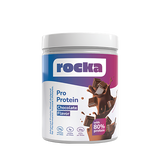
Rarely has it been so natural to consume low-energy foods as it is today. They are often labeled "light" or "zero," made possible by sweeteners or sugar alcohols. For example, Rocka Nutrition uses sweeteners in Smacktastic or in protein powders. This allows an excellent taste despite the low energy content. However, in the past, sweeteners have repeatedly made negative headlines. Is there really a justified risk from practically calorie-free sugar substitutes?
What are sweeteners and how do they work?
The history of sweeteners dates back to the end of the 19th century, when saccharin was discovered in 1879. Sweeteners have a very high sweetness intensity, so they only need to be added to foods in very small amounts. Since they are calorie-free except for aspartame and thaumatin, they can replace the sweetness of sugar in sugar-free or reduced-sugar foods without significant calorie intake [2]. Originally, sweeteners were used to make life easier for diabetics, but nowadays these little helpers are hardly imaginable to be missing from everyday life. They are especially found in many sports products such as protein powders, bars, and sports drinks. Their metabolism in the human body is insulin-independent and they are not cariogenic. Furthermore, they belong to food additives and are therefore assigned E-numbers (see Table 1). The product packaging must therefore display the name of the additive and/or the E-number. Sweeteners may only be used if they have undergone a prescribed approval process and their safety has been confirmed.
Table 1: Properties of selected sweeteners (modified after [2, 5])
|
E number |
Sweetener |
relative sweetness compared to sucrose |
Sweetener calories (energy per 100 g) |
ADI value |
|
950 |
Acesulfame K |
200 |
0 kcal |
0-9 mg/kg BW |
|
951 |
Aspartame |
200 |
approx. 410 kcal |
0-40 mg/kg BW |
|
952 |
Cyclamate |
40 |
0 kcal |
0-7 mg/kg BW |
|
955 |
Sucralose |
500-600 |
0 kcal |
0-15 mg/kg BW |
|
960 |
Steviol glycosides |
40-300 |
0 kcal |
0-4 mg/kg BW |
What are sugar alcohols?
Sugar alcohols, alongside sweeteners, also belong to the so-called sweetening agents and have a high degree of sweetness. Sugar alcohols include erythritol, isomalt, lactitol, maltitol, mannitol, sorbitol, xylitol, and recently also polyglycitol syrup [2]. They are carbohydrates and, except for erythritol, have an energy content of 2.4 calories per gram (see Table 2). Thus, they belong to the caloric sugar substitutes and must be included in the caloric value calculation. They can practically replace household sugar 1:1 but generally have a lower sweetness than sugar.
Table 2: Properties of sugar alcohols (modified after [2])
|
E number |
sugar alcohol |
sweetness compared to sucrose |
caloric value per 100 g |
recommended maximum daily dose |
|
420 |
Sorbitol |
0,55 |
approx. 240 kcal |
40-50 g |
|
421 |
Mannitol |
0,6 |
approx. 240 kcal |
10 g |
|
953 |
Isomalt |
0,4 |
approx. 240 kcal |
30 g |
|
965 |
Maltitol |
0,85 |
approx. 240 kcal |
30 -50 g |
|
966 |
Lactitol |
0,35 |
approx. 240 kcal |
40 g |
|
967 |
Xylitol |
1 |
approx. 240 kcal |
30 -50 g |
|
968 |
Erythritol |
0,6-0,8 |
< 20 kcal |
60-80 g |
Sugar alcohols are metabolized by the body largely independently of insulin, as they have only a low effect on blood sugar. They are also suitable for anyone who wants to eat in a tooth-friendly way, as they are much less cariogenic than sugar. Consumption of larger single doses of 5 – 40 g or daily doses of 20 – 50 g can have a laxative effect [1].
Safety standards for sweeteners -> ADI value
Sweeteners are additives and therefore subject to the sweetener directive of the European Union. For food additives, intake is assessed based on the acceptable daily intake, the so-called ADI value (acceptable daily intake, ADI). This value indicates the amount of the additive that a person can safely consume daily without any risk [6]. Each sweetener is thoroughly tested before it is approved for the market. This includes various toxicological studies, for example, to check for potential genotoxicity (hereditary damaging effect), reproductive and fertility toxicity (damaging effect on reproductive organs), or teratogenicity (damage to the fetus) [9].
The dose at which no adverse reactions occurred in experiments is referred to as NOEL (no observed effect level). Based on the NOEL, the ADI value is determined. To convert NOEL to the ADI value, the former is divided by the safety factor of 100. The value is given in mg/kg body weight and can be consumed by humans lifelong and without concern.
Sweetener side effects
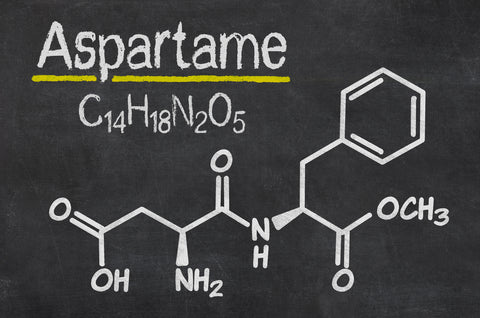
Nevertheless, regular horror stories about sweeteners are published in the media. One of the best-known sweeteners is aspartame (E951), a methyl ester based on amino acids (L-aspartic acid, L-phenylalanine, and methanol), which is used in numerous foods and drinks – including here in Germany. In recent years, there has been ongoing controversy about whether aspartame causes side effects. The rumors surrounding aspartame persist stubbornly, often triggered by the well-known 2005 study from the Ramazzini Foundation, based in Bologna. According to this study, the intake of the sweetener is said to have a direct influence on tumor formation in rats [13].
The EFSA ("European Food Safety Authority") subsequently published a statement in 2006 regarding the safety of aspartame. They criticized the lack of data sets as well as the misinterpretation of the results. Furthermore, unrealistic doses of aspartame were used in the study. Breast cancer is also common in rats, and most of the other tumors could be attributed to chronic pneumonia, the statement continued [4]. Aspartame is therefore only dangerous for people with the inherited metabolic disorder phenylketonuria. This is a disorder of the conversion of the amino acid phenylalanine (a component of aspartame) into tyrosine, causing phenylalanine to accumulate in the body. Therefore, beverages containing aspartame carry the warning "Contains a source of phenylalanine." However, this warning only applies to patients suffering from the mentioned phenylketonuria.
The further breakdown products of aspartame are aspartic acid and methanol. The latter is another common point of criticism. Through two additional oxidation processes, methanol is first converted into formaldehyde and then formic acid. These are considered toxic and can lead to severe health damage, especially with prolonged higher amounts. However, the amounts produced in the body are so small that the doses can be considered harmless [9]. There is also no increased evidence of a heightened health risk for cyclamate, acesulfame K, and sucralose, at least not in studies with well-conducted study designs.
Does sweetener make you fat?
The statement "sweeteners make you fat" is based on the theory that the sugar substitute, through its sweet taste, triggers a cephalic insulin reflex and subsequently causes a drop in blood glucose, leading to increased appetite and unintended hypercaloric nutrition. So, does sweetener actually cause insulin to be released? In a study [7], 14 healthy test subjects were given the sweeteners aspartame, acesulfame K, cyclamate, saccharin, and sucrose in a cross-over design in an aqueous solution with roughly the same sweetness intensity for 18 days.
The aqueous sweetener solutions, like water, do not cause any significant change in plasma insulin concentration at any time. This hypothesis could not be confirmed in another experiment either [11]. The study results rather show that both insulin secretion and blood glucose concentration are not influenced by sweeteners. Therefore, the theory of a possible increased appetite and weight gain effect from regular sweetener consumption cannot be confirmed. On the contrary, sweetener can even be a sensible, though not necessary, component to reduce energy intake [3].
Stevia – the plant-based alternative
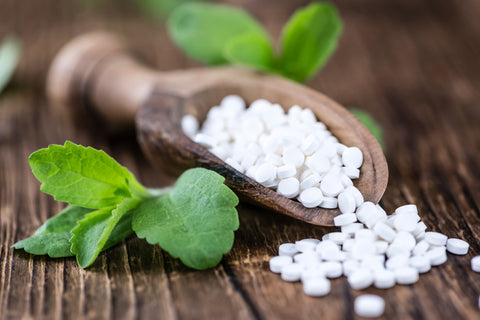
The steviol glycosides from the plant Stevia rebaudiana were approved as a sweetener in the EU on 02.12.2011, as all previous tests showed no health concerns. Stevioside is the most common sweet-tasting glycoside in the plant. Therefore, the supposedly plant-based alternative Stevia is often used. Stevia is of particular interest to many "health-conscious" people because it is derived from a plant and thus associated with "natural." This also applies to the Stevia leaves themselves. But the assumption that Stevia sweeteners (e.g., powder, drops, etc.) are not produced in large chemical factories, unlike the aforementioned sweeteners, is wrong!
So the sweet-tasting leaves, which usually adorn the label and give the buyer a good feeling, have little to do with this anymore. Foods containing the not-so-nice-sounding steviol glycosides, which bear the label "naturally sweetened" or "with natural sweetness from Stevia," are considered misleading according to the Working Group of Food Chemistry Experts from the federal and state governments (ALS).
Has anything really changed decisively due to the new Stevia approval status? No, because ultimately Stevia is a sweetener, like many others, which is plant-based and also produced through a high industrial effort [9].

Other alternatives: honey and agave syrup
As already mentioned, sweetener (as well as sugar as an industrial product) is often spoken of negatively. Alternatively, honey is frequently promoted as the better and healthier option. The natural product is repeatedly attributed health-promoting effects in various media. In its composition, honey (70-80% sugar content) differs only slightly from refined sugar [2]. Raatz et al. (2015) show that honey does not perform better compared to table sugar or fructose-rich corn syrup. Various parameters such as blood lipid levels, blood sugar fluctuations, or inflammation markers that were examined showed no difference compared to the two sugar sources. All sweeteners studied have particularly unfavorable effects on diabetics, as ultimately the sugar from honey is metabolized like any other sugar [10].
Therefore, consuming large amounts of honey is also discouraged, as the sugar content can cause the same disturbances in the body. It is also doubtful that the frequently promoted secondary plant compounds contained in honey are absorbed by the body in significant amounts without the negative effects of excessive consumption outweighing them. The highly praised agave syrup also consists of 85% fructose. Thus, health problems are predictably dose-dependent. Large amounts of fructose have been shown to promote the development of metabolic syndrome in humans [12].
Conclusion
Claims and science diverge more strongly on hardly any other topic. Of course, it cannot be expected that ordering a coffee with sweetener alongside a large piece of Sachertorte will cause the pounds to drop afterward. Since sweeteners have no pharmacological effect that reduces body weight and ultimately the energy deficit is always decisive. However, exactly this can be created by, for example, replacing sugar with sweetener. Whether one does this or rather opts for less sweet or natural sweetness is, of course, up to each individual. According to current scientific considerations, the use of sweeteners is not concerning. Once again, it is a matter of appealing to the individual's reason and adhering to the recommended intake guidelines, so that regardless of the sweetener used, no health consequences need to be expected. Therefore, a serving of Smacktastic can continue to be enjoyed in the daily cup of coffee.
References
1: General Information Service. (2010). The E-numbers in Food. Small Lexicon of Additives (16th ed.). Bonn: aid infodienst.2: General Information Service. (2014). Sugar, Syrups, Honey, Sugar Substitutes and Sweeteners (12th ed.). Bonn: aid infodienst.
3: De La Hunty, A., Gibson, S. & Ashwell, M. (2006). A review of the effectiveness of aspartame in helping with weight control. Nutrition Bulletin, 31 (2), 115–128.
4: European Food Safety Authority (EFSA). (2006). Opinion of the Scientific Panel on food additives, flavourings, processing aids and materials in contact with food (AFC) related to a new long-term carcinogenicity study on aspartame. EFSA Journal, 4 (5).
5: European Food Safety Authority. (2011). Revised exposure assessment for steviol glycosides for the proposed uses as a food additive. Accessed on 08.01.2012. Available at http://www.efsa.eu-ropa.eu/en/efsajournal/doc/1972.pdf
6: Grashoff, K. (2005). Sweeteners. Ernährungs Umschau, B5-B8.
7: Härtel B, Graubaum HJ, Schneider B (1993). Influence of sweetener solutions on insulin secretion and blood glucose levels. Ernährungs-Umschau, 40, 152–155.
8: Mattes, R.D. & Popkin, B.M. (2009). Nonnutritive sweetener consumption in humans: effects on appetite and food intake and their putative mechanisms. The American Journal of Clinical Nutrition, 89 (1), 1–14.
9: Müller, S.-D. (2010). Sweetener Myth: The Whole Truth About Artificial and Natural Sugar Substitutes. Plus: Everything About Stevia (1st ed.). Vienna: Kneipp Verlag.
10: Raatz, S.K., Johnson, L.K. & Picklo, M.J. (2015). Consumption of Honey, Sucrose, and High-Fructose Corn Syrup Produces Similar Metabolic Effects in Glucose-Tolerant and -Intolerant Individuals. The Journal of Nutrition, 145 (10), 2265–2272.
11: Rodin, J. (1990). Comparative effects of fructose, aspartame, glucose, and water preloads on calorie and macronutrient intake. The American Journal of Clinical Nutrition, 51 (3), 428–435.
12: Seneff, S., Wainwright, G. & Mascitelli, L. (2011). Is the metabolic syndrome caused by a high fructose, and relatively low fat, low cholesterol diet? Archives of Medical Science: AMS, 7 (1), 8–20.
13: Soffritti, M., Belpoggi, F., Esposti, D.D. & Lambertini, L. (2005) Aspartame induces lymphomas and leukaemias in rats. Eur. J. Oncol., 10 (2), 107-116.
14: Stanhope, K.L., Schwarz, J.-M. & Havel, P.J. (2013). Adverse metabolic effects of dietary fructose: results from the recent epidemiological, clinical, and mechanistic studies. Current Opinion in Lipidology, 24 (3), 198–206.