









The 7 Best Tips to Prevent Muscle Soreness
Especially when you introduce new training stimuli or want to fully restart after a long training break, you will feel an unpleasant pain in the strained muscle areas at the latest the day after the exertion: muscle soreness! This pain is the result of unusually intense physical strain, which each of us has certainly experienced at least once. In today’s article, we want to clarify which stimuli cause muscle soreness, what the best tips against muscle soreness are, and whether it makes sense to continue training as usual despite muscle soreness.
What is “muscle soreness”?
Muscle soreness – that’s what we call a well-known phenomenon and the often feared enemy when we have pushed ourselves too hard during training or try to give 120% or more after a long training break. The term refers to the movement pain in the muscles that occurs some time after unusually intense training. The result: the affected muscles are hard, swollen, stiff, sensitive to touch, and unable to handle greater exertion.
Muscle soreness = delayed muscle pain after unfamiliar intense strain
Although an intense training stimulus usually results in muscle soreness, the pain intensity can be increased by a lack of warm-up or an improper warm-up. The problem: unlike fatigue pain that you feel during intense exercise, muscle soreness appears at the earliest 24 - 48 hours later. Often, we only notice after the workout that the intended intensity was probably higher than the immediate feeling during training suggested. However, if you really want to make progress, you won’t be able to completely avoid muscle soreness, because new training stimuli are essential for your muscle growth. And let’s be honest, if it’s not too severe, it’s kind of a confirmation that you accomplished something in training, right?
How does muscle soreness develop?
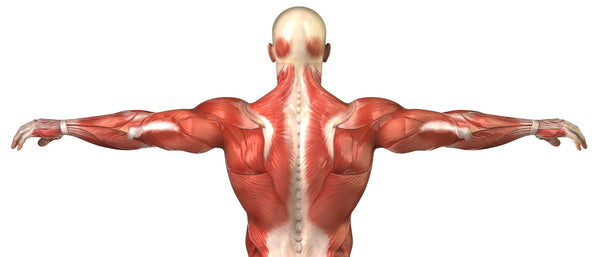
Muscle soreness mainly occurs due to eccentric, usually unfamiliar, strain on the muscles, which causes damage to the muscle fibers. This damage triggers an inflammatory response in the body, which is then perceived as delayed pain. The earlier assumption that muscle soreness is caused by lactic acid (so-called lactate) has now been disproven. Although lactic acid increases with intense muscle exertion, the associated acidification of the muscle is not the cause of muscle soreness. However, a buildup of lactate in the muscles temporarily causes a significant drop in performance and a burning sensation in the muscles, which you have probably already noticed during the last repetitions of intense sets in strength training.
Like many other symptoms, the timing of muscle soreness depends on various and partly individual factors such as:
- Age
- Individual training level
- Training intensity and volume
- Trained muscle group
- Performed exercise
- Observing a subsequent training break
The symptoms of muscle soreness are most noticeable in the morning after the workout, with your muscles swollen, stiff, weak, and especially sensitive to pressure. Additionally, the range of motion of the involved joints is often severely limited. The muscle pain peaks after one to three days and lasts up to a week depending on the extent of the inflammatory reaction.
Causes of muscle soreness:
- Unfamiliar physical activity after a long break
- New, not yet perfectly mastered/internalized movements
- Especially heavy loads
- Negative (eccentric) muscle movements
- Insufficient nutrient supply for repairing the affected structures
- Imbalanced electrolyte levels
As you can see, muscle soreness is the result when you intensely train an unfamiliar movement pattern, intensify your exercise execution with high extra weight, and/or perform the exercise with as long a negative (eccentric) phase as possible. Therefore, new, optimized training plans with partly unfamiliar exercises are quite a guarantee for muscle soreness. If you want to reduce the risk of sore muscles, focus on controlled movements during execution and avoid jerky motions whenever possible. Leave your ego at home sometimes and start new exercises or after a training break with light weights and lower intensity.
To all training beginners:
As a beginner in training, you will have to get used to the feeling of muscle soreness during the first weeks of your active training period due to the unfamiliar strain. However, if you keep at it regularly, the extent of muscle soreness will decrease over time because your body will adapt to the movements and the resulting strain.
Properly warming up, keeping the weight moderate, and starting slowly: these avoidance strategies may sound simple but are rarely followed by many athletes. Why, you ask? Many cling to the misconception that only significant muscle soreness leads to muscle growth. Training without any subsequent pain is therefore considered ineffective. But is that really true?
Is muscle soreness absolutely necessary for optimal muscle growth?
Clearly: No! Muscle soreness is not absolutely necessary for optimal muscle growth. If you have completed progressive training with intense phases of exertion that did not cause subsequent soreness, sufficient stimuli for muscle growth can usually still be achieved.
But how do you determine if your training has released enough signals for muscle growth? Unfortunately, there is no magic formula. Sure, muscle soreness can be a clue, as the level of pain indicates how much your muscles were challenged, but it is not a reliable measure.
NOTE: Muscle soreness is not the sole indicator of significant muscle growth. Instead, progressive training with appropriate intensity and proper nutrition are directly related to muscle growth.
How can I prevent muscle soreness?
The best and simplest prevention remains consistent training, as trained athletes experience muscle soreness less often. Proper technique is crucial here. Pay special attention to correct form during the negative (eccentric) phase of movements.
What can I do before the workout?
- Perform a short but effective warm-up of 5 to 10 minutes; you can warm up by jogging, using a stepper, or cycling on a stationary bike. Make sure to engage the target muscles during your warm-up.
- Afterwards, you can lightly stretch the corresponding muscle groups, ideally using dynamic stretching.
- Now start with your first exercise and initially perform it without additional weight, possibly using your body weight alone or a minimal weight. Focus on slowly warming up the targeted muscle group.
NOTE: To best limit muscle soreness, you should gradually increase physical exertion and start your training with an effective warm-up phase. This gives your skeletal muscles time to adapt to the upcoming strain and tension.
As you can see, a proper warm-up has several advantages. If you want to build muscle, you should aim to adjust the intensity during training. Therefore, despite a good warm-up, you may still feel muscle soreness as a signal of your increased performance readiness. Some athletes need this feeling as a kind of confirmation, but no one really finds muscle pain pleasant.
Muscle soreness: What to do after the workout?
Immediately after the workout, cold therapies have proven to be a useful method: You don’t necessarily need a cryotherapy chamber to do something about your muscle soreness. A cold bath for the affected muscles at a water temperature of 11 - 15 °C for 11 - 15 minutes has proven to be a good method for improved recovery from muscle soreness. Furthermore, you should ensure adequate water and nutrient intake, especially carbohydrates, proteins, and minerals. Your body needs these to repair damaged cells and transport waste products out of the affected cells.
In contrast, heat therapy (e.g., sauna) and overly extensive active recovery immediately after training should be avoided, as their blood circulation-promoting effect can intensify the inflammatory process in the muscles. These methods are better suited to speeding up the fading of existing muscle soreness.
This brings us to the question: How do I get rid of muscle soreness as quickly as possible and which methods really help?
Our 7 tips against muscle soreness: What really helps?
Okay, the bad news first: There is no magic formula to immediately cure or significantly speed up muscle soreness. The myth that you can “work out” muscle soreness away the next day is also false. Worse still: doing the same intense workout the next day slows down the recovery process. Still, there are a few ways you can support your body during recovery to get rid of muscle soreness faster.
What to do for muscle soreness?
#1 Take a break: Give yourself and your muscles a break and time to recover. Your body needs the rest for optimal healing; otherwise, you risk serious damage. The saying goes: time heals all wounds, because depending on the intensity, your muscle soreness will subside after two to five days.
#2 Use sports balms with arnica: Light – and emphasis on light – massages with sports balms containing arnica act like a kind of lymphatic drainage and promote blood circulation in the affected muscle areas. The natural active ingredient in arnica has a relaxing effect and can relieve pain in your muscles.
#3 Temperature therapy: In the first phase of muscle soreness, cold baths for the affected muscles (11 - 15 °C for 11 - 15 minutes) have proven effective. From the day after the workout, heat therapy, for example in the form of sauna sessions, has established itself as a helpful recovery method. Increased blood flow can support healing processes, which can help relieve sore muscles.
#4 Massages: Current literature shows that massages after exertion are effective in reducing the painful and performance-reducing effects of muscle soreness.
#5 Foam Rolling: A type of massage against muscle soreness that you can do yourself is light foam rolling: Here, tense muscles are kneaded with a special foam roller. Intensive rolling movements release muscle tension and stuck fascia. Clinical studies have shown that foam rolling can reduce muscle soreness pain.
In the following video, we show you the basics of foam rolling and fascia training, so nothing stands in the way of optimal recovery:
#6 Drink enough water: Drinking is important for your overall physical health and fitness. Especially during and after training, you can’t avoid water because your body needs to be sufficiently hydrated for peak performance. If you have trouble drinking enough water, you can use sugar-free, flavored protein soft drinks (like our Clear Protein) or flavored drink powders (such as Water Refresher).
#7 Pay attention to the right nutrients: It has long been known that healthy nutrition significantly determines your training success. The following foods especially support you when your muscles ache:
→ Carbohydrates: Provide the energy needed for your recovery.
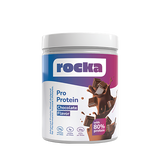
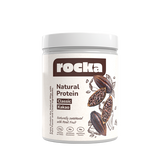
→ Proteins: Provide the building blocks for repairing damaged muscles. Try one of our protein powders at Rocka Nutrition now.
→ Fats: Especially omega-3 fatty acids can reduce the intensity of muscle soreness through their anti-inflammatory effects. For your optimal supply of valuable algae oil, try our plant-based Vegan Omega capsules.
→ Fruits and vegetables: The contained secondary plant compounds can reduce the intensity of muscle soreness.
→ Homemade tea from ginger and turmeric: Ginger and turmeric have anti-inflammatory effects and can reduce the impact of muscle soreness.
→ Electrolytes: A balanced electrolyte level is also important to create the right conditions for your body to get rid of muscle soreness. For this, we perfectly recommend:
- The Women's Daily Vitamin & Mineral Drink Pink Essentials. The included nutrient complex with biotin, iron, zinc, and vitamin D helps maintain normal skin, hair & nails.
- The innovative strength supplement Strong with creatine and ashwagandha, which, based on the latest scientific findings, meets the needs of everyone who wants to boost their gym performance and cover their body with the most important vitamins and minerals.
What to do against muscle soreness in the thigh?
This question reaches us most often because most people know the feeling of extreme muscle soreness in the leg. As with any other body part, the tips mentioned above also apply to the legs, but we still want to give you a few practical examples:
Cold and heat therapy are particularly easy to apply to the legs: after your workout, take a cold bath (11 - 15 °C) in the tub so that your legs are fully covered by the water and stay in the tub for 15 minutes. Another preventive measure, as already mentioned, is foam rolling. Since the legs have such large muscles, foam rolling is also easy to do on the legs. Carefully find the intensity that suits you and continue rolling when you feel the pain decrease and the tension in your muscles ease.
Muscle soreness, what to do? Conclusion
At this point, we especially want to emphasize the first tip – take a break and give your body time to recover. Because an optimal healing process should not be underestimated. Still, many amateur athletes go to the gym despite pain, tension, and swollen muscles to stick to their strict training plan as best as possible. But is it really advisable to train with muscle soreness? And when should you rather take a break?
Can I train despite having muscle soreness?
Despite persistent muscle soreness, the desire for the next intense training is there. That’s why the question often arises whether you can train with muscle soreness. The fact is, if you have persistent muscle soreness and almost unbearable pain, you should rest for a few days. Remember: The more your muscles hurt, the more you need recovery time. If muscle soreness only affects one muscle group, such as the legs, there is of course nothing against training your upper body with muscle soreness. You should simply skip the muscle group affected by soreness during training. As soon as the range of motion of the affected muscles is limited, you should rest a bit and take a break. Are you already experiencing strong pain when running and can barely bend your legs? You urgently need a training break; the recovery process still takes some time and will only be delayed by training. Training with muscle soreness is counterproductive, increases the risk of injury, and is associated with reduced performance!
NOTE: As a rule of thumb for muscle soreness, you should take a training break if you can no longer perform the corresponding movements (bench press, pull-ups, squats, etc.) cleanly and with full range of motion due to pain.
Training despite muscle soreness: Conclusion
Muscle soreness is certainly unpleasant, but it is not dangerous as such. Even trained athletes experience it from time to time when they expose themselves to new training stimuli. If it happens to you, you should definitely give the affected muscles the opportunity to recover. If they do not get this over a longer period, the muscle inflammation can become chronic. As a consequence, you will experience more injuries, illness, and ultimately a longer training break. After a longer training break, you should definitely start training slowly and ensure adequate muscle warm-up. Feel free to consider our tips for beginners when you resume training after a longer pause. Remember: A sprint from cold muscles is difficult even for the best athlete because they cannot fully unleash their potential. Before your workout, do a proper warm-up and pay attention to a balanced and healthy diet. If muscle pain still strikes you, you can alleviate it somewhat with our 7 tips and support the healing process as best as possible.
Do you have any other tips for dealing with muscle soreness? Do you continue your training despite muscle soreness?
We look forward to your feedback.