








Your Ultimate Creatine Guide: Myths, Dosage & Performance
You’re considering creatine, but rumors about hair loss, kidney damage, and a bloated appearance hold you back? Although the potential benefits of supplementation, such as increased strength and cognitive performance, seem promising, concerns and uncertainties remain.
In this guide, we examine the facts and help you separate myths from reality. We provide you with a clear, scientifically based roadmap, debunk the top 5 myths, and show you how to use creatine simply and safely for maximum results.
Contents
The 5 biggest creatine myths and what’s really true
What is creatine and what does it really do?
Creatine dosage: the simple building block
Which creatine is right for you?
Frequently Asked Questions (FAQs)
The 5 biggest creatine myths and what’s really true
- Myth 1: Creatine causes hair loss. → False. There is no majority evidence supporting this claim.1
- Myth 2: Creatine damages the kidneys. → False. In healthy people, supplementation is proven to be safe.1
- Myth 3: Creatine causes bloating. → False. Water is stored specifically in the muscle, making it look fuller, not bloated.
- Myth 4: You have to take breaks (cycles). → False. Continuous use is the recommended and most effective approach.
- Myth 5: A loading phase is mandatory. → False. It’s optional but not necessary for success.
What is creatine and what does it really do?

Think of creatine as the turbo boost for your muscles. Your body uses an energy carrier called ATP for short, intense efforts (like sprints or heavy lifts). However, you only have a few seconds’ supply of it.
Creatine is stored in your muscles as creatine phosphate and quickly replenishes this ATP reserve. The result:
- More Strength: You achieve crucial additional reps in challenging exercises.
- Increased Performance: Your performance during high-intensity efforts improves.
- Better Recovery: You recover faster between sets.
Additional benefit: Your brain also benefits – studies2 show that creatine can support cognitive performance, especially under stress or sleep deprivation.
Creatine dosage: the simple building block
Meta-analyses and position papers from the International Society of Sports Nutrition show that supplementing with at least 3 g of creatine monohydrate per day supports short-term ATP regeneration and improves physical performance during short-term, high-intensity exercise.3
So the right dosage is easier than you think: The most effective method is continuous intake of 3–5 grams per day. A loading phase is not necessary for long-term success. Just take it daily to keep your stores filled.
Which creatine is right for you?

Once the basics are clear, the crucial question arises: Pure creatine or a smart all-in-one formula? We have the perfect solution for both goals.
| Premium Creatine Monohydrate | Performance Essentials | |
|---|---|---|
| Creatine form | Creatine monohydrate | Creatine monohydrate |
| Main focus | Maximum purity, pure creatine effect | Daily all-in-one performance upgrade |
| Ideal for | Purists, strength athletes, beginners | Ambitious athletes, everyday athletes, biohackers |
| Contains | 100% pure Creapure® creatine monohydrate | 5 g pure Creapure® + magnesium, zinc, ashwagandha, Oxystorm®, and more. |
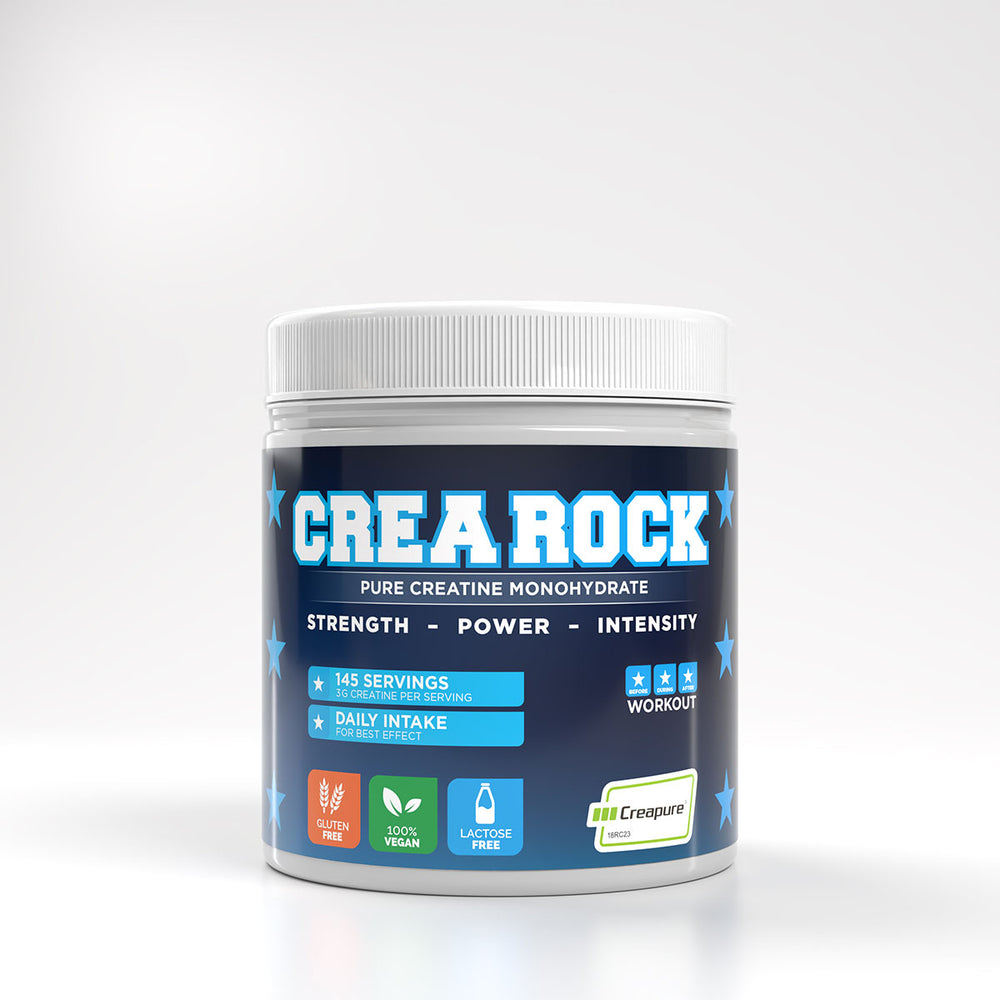
For purists: Premium Creatine Monohydrate (100% Creapure®)
Do you want the pure and well-researched effect of creatine? Then rocka Premium Creatine Monohydrate is your choice.
- Maximum purity: We use only Creapure®, a patented creatine monohydrate made in Germany, known for the highest quality and safety.
- No compromises: No fillers, no unnecessary additives. Just the pure active ingredient for your strength and performance boost.
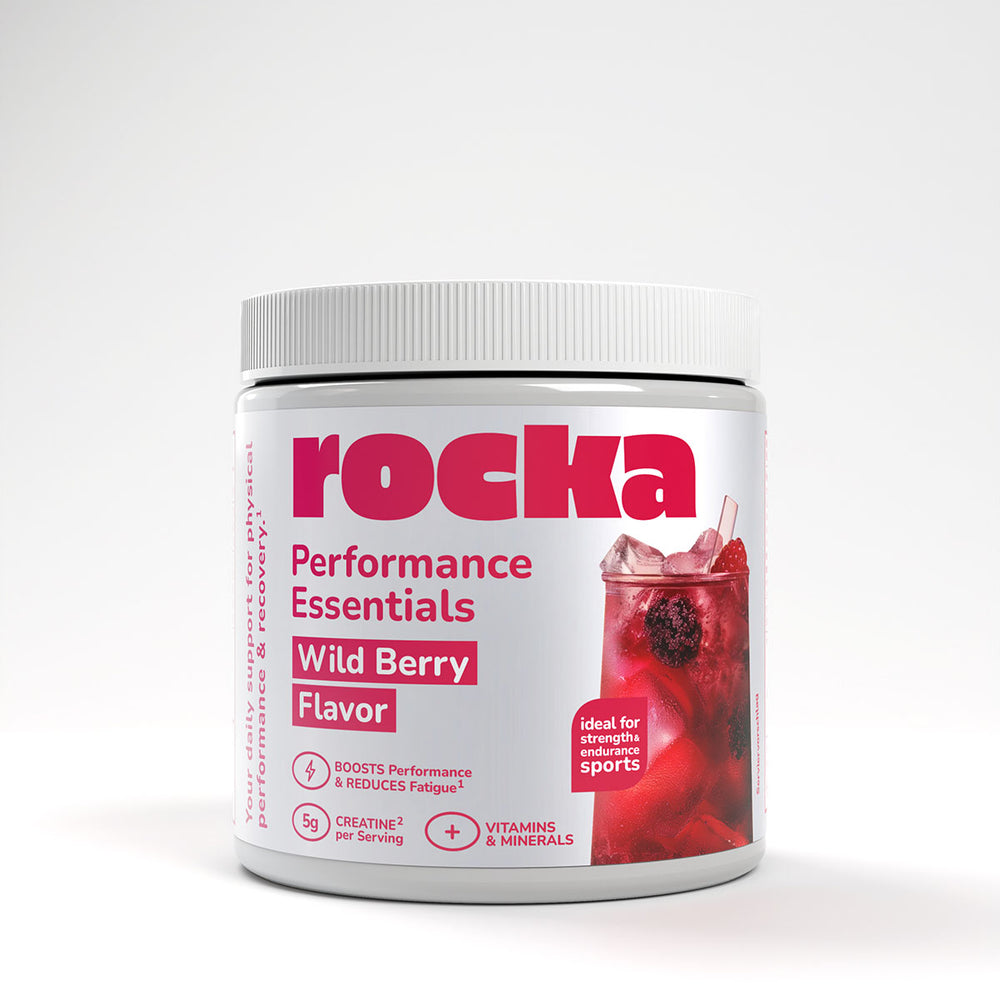
For everyday athletes: Performance Essentials
You don’t just want to increase your strength but optimize your entire daily performance? The Performance Essentials are your daily all-in-one solution.
With pure Creapure® and functional ingredients to support your overall performance – from energy during training to stress management and health to recovery.
To the product- Performance & strength: 5 g creatine boost your power during intense training.
- Mental balance & recovery: Ashwagandha & magnesium support regeneration and stress balance.
- Muscle function & stress management: Zinc & magnesium compensate for electrolyte losses.
- Supply during endurance sessions: Oxystorm® & iron promote oxygen supply to the muscles.
- Basic supply: Vitamins D3, K2, folic acid & iodine support key metabolic processes.
The top myths in detail check
-
Myth: Creatine causes hair loss.
There is no solid scientific evidence for this. The myth is based on a small study (2009) whose results were not reproduced. -
Myth: Creatine damages the kidneys.
In healthy people, creatine is considered one of the safest supplements overall. Numerous studies confirm its safety with long-term use. -
Myth: Creatine causes bloating and weight gain.
Water retention only occurs in the muscle – for fuller, not bloated muscles. No effect on fat gain. -
Myth: You have to take breaks.
False. Modern research recommends continuous intake without cycles. -
Myth: A loading phase is mandatory.
Not necessary – consistent intake of 3–5 g daily leads to the same result.
Frequently Asked Questions (FAQs)
Do I have to take creatine in cycles or take breaks?
No, breaks are not necessary. Creatine is designed for continuous use and is safe. Ongoing supplementation ensures your muscle stores stay filled.
Do I gain weight from creatine?
Yes, gaining 1–2 kg at the beginning is normal – it’s water in the muscle, not fat. The effect is usually temporary and makes your muscles look fuller.
When is the best time to take it – before or after training?
The timing is secondary – daily consistency is more important. A slight advantage after training is possible but not decisive.
Can I combine creatine with coffee?
Yes. Caffeine does not significantly impair the effect of creatine. Just make sure to stay well hydrated.
Does creatine also help during dieting?
Yes – it helps maintain strength performance despite a deficit and protects muscle from breakdown. The water retention is intracellular and does not affect fat loss.
Is creatine also useful for women?
Absolutely. Women benefit just as much – the recommended dosage remains 3–5 g per day.
What happens if I stop taking creatine?
The stores empty over weeks, strength/performance returns to baseline. You do not lose muscle mass, only intramuscular water.
Sources
- Antonio, J., Candow, D. G., Forbes, S. C., Gualano, B., Jagim, A. R., Kreider, R. B., Rawson, E. S., Smith-Ryan, A. E., VanDusseldorp, T. A., Willoughby, D. S., & Ziegenfuss, T. N. (2021). Common questions and misconceptions about creatine supplementation: what does the scientific evidence really show? National Library of Medicine. Retrieved September 02, 2025, from https://pmc.ncbi.nlm.nih.gov/articles/PMC7871530/#Abs1
- Avgerinos, K. I., Spyrou, N., Bougioukas, K. I., & Kapogiannis, D. (2018). Effects of creatine supplementation on cognitive function of healthy individuals: A systematic review of randomized controlled trials. Exp Gerontol, 108(1), 166-173. https://pmc.ncbi.nlm.nih.gov/articles/PMC6093191/pdf/nihms-983799.pdf
- European Commission. (n.d.). Creatine increases physical performance in successive bursts of short-term, high intensity exercise. Food and Feed Information Portal Database. Retrieved September 18, 2025, from https://ec.europa.eu/food/food-feed-portal/screen/health-claims/eu-register/details/POL-HC-6365
- Hultman, E., Greenhaff, P. L., Söderlund, K., Timmons, J. A., & Cederblad, G. (1996, July 01). Muscle creatine loading in men. PubMed. Retrieved August 29, 2025, from https://pubmed.ncbi.nlm.nih.gov/8828669/