








Lactose Intolerance: Definition, Food Guide, and Tips
Surely the term “lactose intolerance” is not entirely new to you – lactose-free products can now be found in almost every supermarket. But what should you pay attention to if you have an intolerance, and what special considerations arise specifically for strength athletes? This article aims to clarify exactly these questions and serve as a possible guide for those of you who suspect an intolerance or have been living with it for some time.
What exactly is lactose intolerance?
In Germany, an estimated 12 million people are lactose intolerant. This makes lactose-containing products the food with the highest intolerance rate, even ahead of nuts. People who cannot tolerate lactose (also known as milk sugar in German) experience stomach and intestinal discomfort after consuming products containing this milk sugar. This is because the enzyme lactase, which is needed to break down lactose, is not produced in sufficient amounts. As a result, the milk sugar passes undigested into the large intestine, where gases are produced that can trigger the symptoms. Depending on how little lactase is available to the body, these symptoms in the stomach and intestines can vary in intensity.

Which foods contain lactose?
As the name milk sugar suggests, lactose is found in milk and dairy products such as quark, cheese, and yogurt. Products processed with dairy, like chocolate, baked goods, and many sausages, also contain lactose and should therefore be avoided if you have an intolerance. This also includes whey protein, as it is derived from whey. Since lactose is a popular filler in the industry, it can be found on the ingredient lists of many products where you wouldn’t normally expect it. This applies, for example, to numerous spices, sauces, ready meals, cereal products, and sweets. When it comes to medications, it is also very important to check whether they contain lactose if you have an intolerance, and always ask your doctor or pharmacist specifically for lactose-free medication. If you experience the symptoms mentioned above after consuming these products, lactose intolerance cannot be ruled out. You can initially try to identify the cause yourself by completely avoiding lactose-containing products for a while. However, a definitive diagnosis should always be made by a doctor who can also provide individual advice. In most cases, a diagnosed lactose intolerance is managed by first undergoing a 2-4 week elimination phase, during which you carefully avoid consuming as much lactose as possible. This is followed by a test phase, where lactose-containing products are gradually reintroduced in minimal amounts to determine your personal tolerance level. Based on this, an individual and long-term nutrition plan can be created. To be on the safe side during acute symptoms or uncertainty about the lactose content of foods, for example during a restaurant visit, the enzyme lactase can also be taken in tablet or powder form, making milk sugar-containing foods tolerable for a short period.
Lactose intolerance in strength training
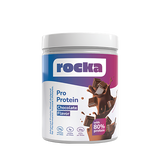
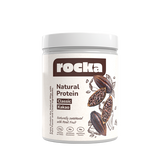
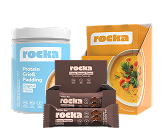
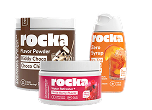
Dairy products like quark, milk, and protein supplements are often among the most popular protein sources for strength athletes and also help meet daily calcium requirements. If you have lactose intolerance, you need to make sure to use lactose-free versions of dairy products or obtain the protein and calcium from other sources. Consuming lactose-containing products despite symptoms should definitely be avoided. When your body is busy processing lactose it doesn’t tolerate well, it cannot perform at its full potential, which will also affect your training progress. Fortunately, you don’t need to worry about getting enough protein – Rocka Nutrition has developed numerous products that can be consumed even with lactose intolerance. For the lactose content of foods, we adhere to a limit of less than 100 mg of lactose per 100 milliliters of ready-to-eat product. For protein powders, this value applies accordingly to the preparation of the powder with water.

On our website, you will find a corresponding category for all our lactose-free products. This way, you don’t have to search long and can immediately see all suitable products, from protein powders to numerous flavor powders and sugar-free sauces. Additionally, every product packaging of lactose-free products is marked with a blue button to make it even clearer whether the product can be safely consumed if you have an intolerance.
Conclusion: the most important points at a glance
- With lactose or milk sugar intolerance, stomach and intestinal symptoms occur after consuming dairy products
- There are now lactose-free alternatives for many dairy products, although these are often somewhat more expensive due to their more complex manufacturing processes; because of reduced dairy consumption, you should ensure your body still gets enough calcium, for example from sources like broccoli, beans, and various types of cabbage
- Do not take symptoms lightly and have a doctor check whether you have lactose intolerance if in doubt
- You can still easily meet your protein needs thanks to lactose-free YUM YUM WHEY as well as ROCKA WHEY ISOLATE and ROCKA MILK.